
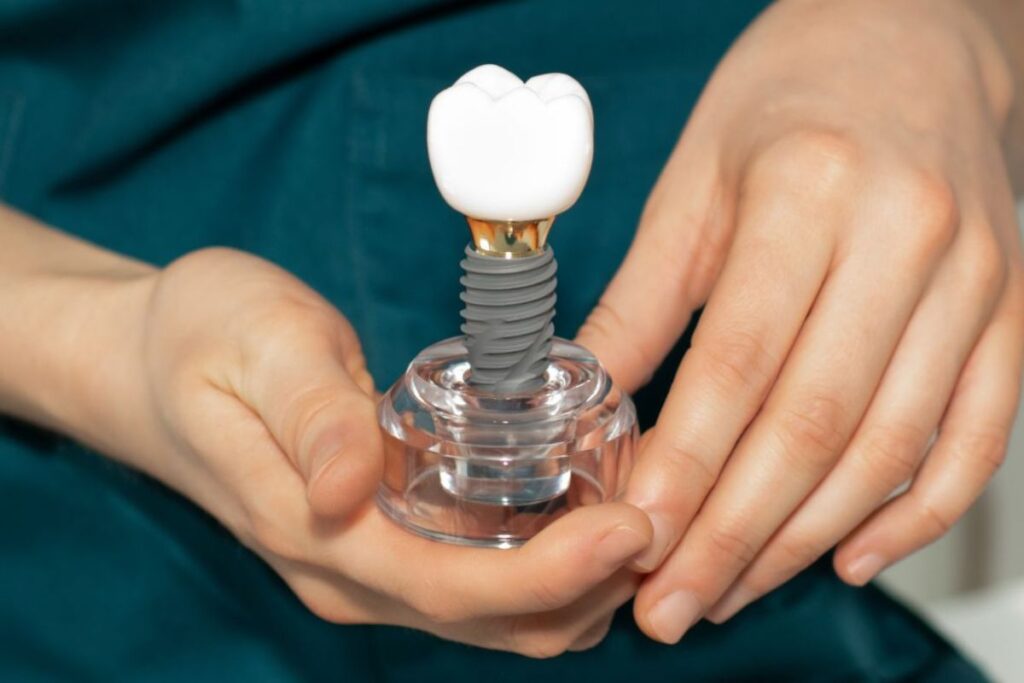
Dental implants are artificial tooth roots made of titanium surgically placed into the jawbone to support dental restorations such as bridges, dentures, or crowns. These implants not only restore the functionality and appearance of teeth but also prevent bone loss caused by missing teeth. Traditional and mini implants serve the same purpose but differ in size, durability, and functionality.
Traditional Dental Implants
Traditional implants are screw-shaped devices that dentists design to act as tooth roots. Dentists permanently fix these into the jawbone and support various dental restorations to replace missing teeth.
Benefits and Features of Traditional Implants
- Durability: Traditional implants can last a lifetime, often exceeding 25 years with proper care.
- Stability and Strength: Their larger size allows them to handle higher chewing forces, ensuring equal weight distribution.
- Prevents Bone Loss: These implants help maintain bone structure and density, avoiding long-term deterioration.
- Versatility: Traditional implants support many dental restorations, such as bridges, crowns, and full-mouth dentures.
Who Should Consider Traditional Implants?
Traditional implants are often ideal for patients who have sufficient jawbone density and are looking for a long-term, stable solution to replace one or more missing teeth. They are well-suited for those who want a durable option that closely mimics the look and function of natural teeth. A dental evaluation can help determine if traditional implants are the right fit for your oral health needs.
Traditional Dental Implants are ideal for:
- Patients with sufficient jawbone density.
- Those seeking a natural and permanent solution for missing teeth.
- Individuals are looking for a highly durable and low-maintenance option.
Important Considerations
- Traditional implants require invasive surgical procedures, often involving multiple steps and a lengthy healing process.
- Patients with low bone density may need bone grafting before implant placement.
Mini Dental Implants
Mini implants serve as smaller versions of traditional ones, about half the size, and people often prefer them when affordability and less invasiveness are priorities.
Benefits and Features of Mini Implants
- Affordable Option: Mini implants are more budget-friendly than traditional ones, making them accessible to a broader range of patients.
- Minimally Invasive: These implants involve a less invasive placement process, often completed in a single visit.
- Stabilization of Dentures: Mini-implants are commonly used to secure lower dentures, improving function and comfort.
Who Should Consider Mini Implants?
Mini implants can be a great option for patients who may not have enough bone density for traditional implants or want a less invasive procedure. They are often suitable for those looking for a quicker recovery, a more affordable solution, or added stability for dentures. A dental evaluation can help determine if mini implants are the right choice for your needs.
Mini Dental Implants may be suitable for:
- Patients with low bone density who cannot undergo bone grafting.
- Individuals seeking a less invasive and quicker procedure.
- Those needing replacements for smaller teeth or stabilization for dentures.
Factors to Keep in Mind
- Mini implants generally have a shorter lifespan than traditional implants.
- They are less suited for extensive restorations due to their limited ability to handle higher chewing forces.