
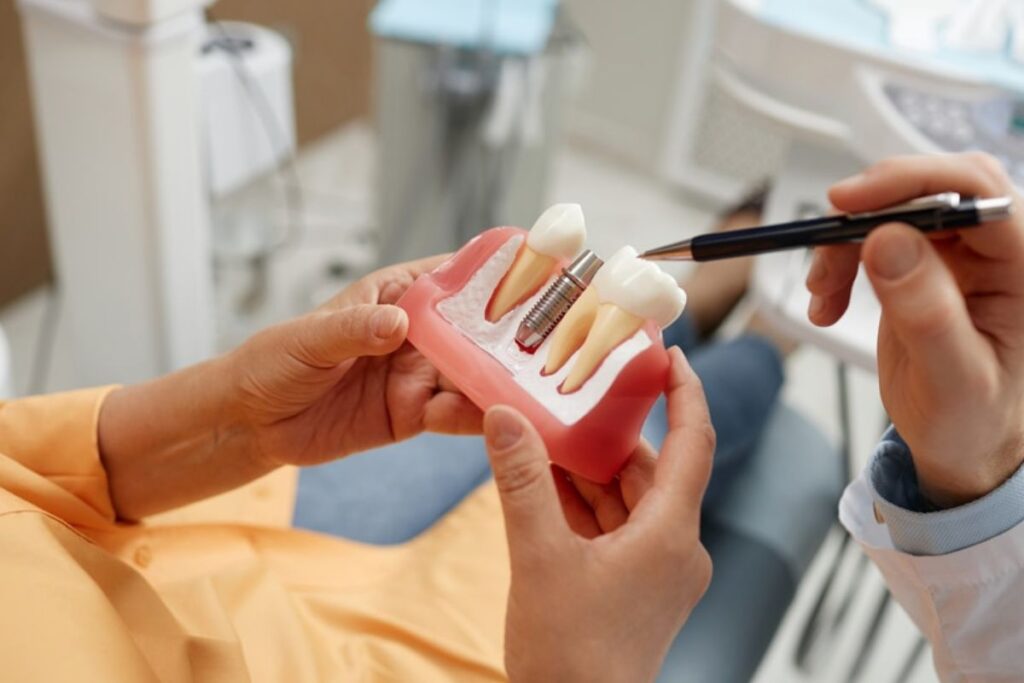
You’ve invested in dental implants to restore your smile, bite, and confidence, so it can be alarming if something feels off. Whether you’ve noticed a loose crown or suspect a part of your implant may be damaged, the good news is that most implant issues are fixable. It’s rarely the implant post itself that fails, but rather one of the components connected to it.
Instead of resorting to DIY solutions, read on to understand what causes implants to break and how to respond if your replacement tooth ever feels compromised.
How Do Dental Implants Break?
Dental implants are made of three parts:
- The implant post, surgically embedded in your jaw
- The abutment, which connects the post to the visible tooth
- The dental crown, which mimics your natural tooth
These parts work together to function like a natural tooth. However, each component can be vulnerable to damage. Common causes include:
- Excessive bite pressure
- Facial trauma or injury
- Untreated gum disease
- Poor placement or restoration
- Grinding or clenching (bruxism)
- Chewing hard items (like ice or pens)
- Using your teeth as tools
Among these, a common issue is a broken or loose abutment screw, which connects the implant to the crown. This tiny screw endures a lot of stress and can sometimes loosen or fracture. Fortunately, it’s often replaceable without affecting the implant post. Similarly, crowns can become loose or worn over time, especially if you grind your teeth or eat hard foods.
If you suspect an issue, visiting a dental professional is essential for evaluating the condition of your dental implants in Twin Falls.
Signs Your Dental Implant May Be Failing
Watch for these symptoms that may indicate something’s wrong:
1. Loose Crown or Tooth Cap Falls Off
If the crown comes off, it might be due to a loosened screw or failed dental cement. Sometimes it can be reattached, but if the crown is cracked or damaged, it may need to be replaced entirely.
2. Uneven Bite
A sudden change in your bite, such as one tooth feeling taller, could be a sign that the crown has shifted or that an underlying part has loosened. You may also feel something unusual between your gums and the crown. Although it may seem minor, this can cause bite misalignment and stress on surrounding teeth.
3. Pain, Swelling, or Redness
Any discomfort around the implant site, especially if accompanied by swelling or bleeding, could signal an infection or inflammation. Gum recession or warmth around the implant area should also be evaluated immediately.
What Should You Do If Your Dental Implant Breaks?
Here’s how to handle a damaged implant the right way:
Step 1: Avoid DIY Repairs
Do not attempt to glue the crown back or push it into place. This can lead to further damage or infection. Stop using that side of your mouth and avoid chewing hard foods until you see your dentist.
Step 2: Contact Your Dentist Immediately
Contact your dental office and explain the situation. Most implant issues can be addressed quickly when caught early, preventing further complications.
Step 3: Get a Professional Evaluation
Your dentist will examine the area visually and may use X-rays to identify what went wrong—whether it’s the crown, abutment, or implant post. Once diagnosed, they’ll offer the appropriate repair, which may include replacing a crown, tightening the screw, or in rare cases, replacing part of the implant structure.
Don’t Panic—Most Issues Are Fixable
Though discovering a problem with your implant may be upsetting, most issues are minor and can be corrected without replacing the entire implant. With timely care and professional help, you’ll be smiling confidently again in no time.
At Green Acres Family Dentistry Twin Falls, we’re here to help you maintain your dental implants for the long haul. If your crown feels loose or you suspect something isn’t right, don’t wait. Contact us to schedule an appointment and restore the strength and appearance of your smile.